Nepal
Trip Code: NOA-37894 - 3 Departures Available
Just booked! Get your spot before it's too late.
Price
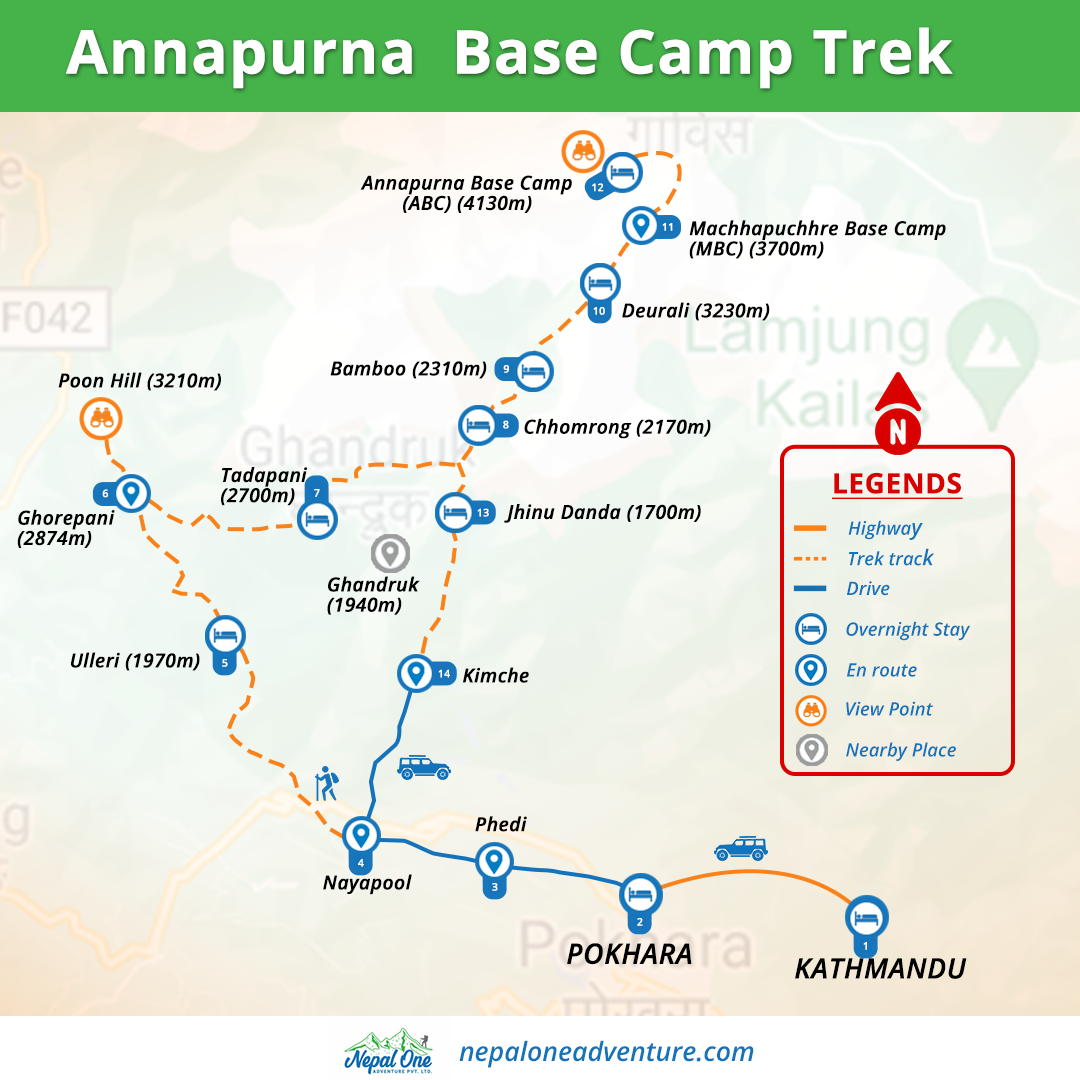
Kathmandu-(7 hrs drive) Pokhara- (1.5 hrs)(Nayapool- Ulleri)- (6-7 hrs)Ghorepani- (5-6 hrs)Tadapani- (5-6 hrs) Chumrung-(5-6 hrs) Dovan- (4-5 hrs)Deurali-(5 hrs) (MBC- Annapurna Base Camp)(5-7 hrs)- Bamboo- (3-4 hrs)Jhinudada-(3-4 hrs) (Kimche- Pokhara)-(25 mins by flight) Kathmandu
February, March, April, May, September, October, November, December
The Annapurna Base Camp (ABC) trek is a legendary Himalayan adventure that transitions from subtropical terraced farmlands to high-altitude alpine landscapes. This route is unique because it places you in a glacial basin surrounded by giants over 7,000 and 8,000 meters, including the world’s 10th-highest peak, Mt. Annapurna I (8,091m).
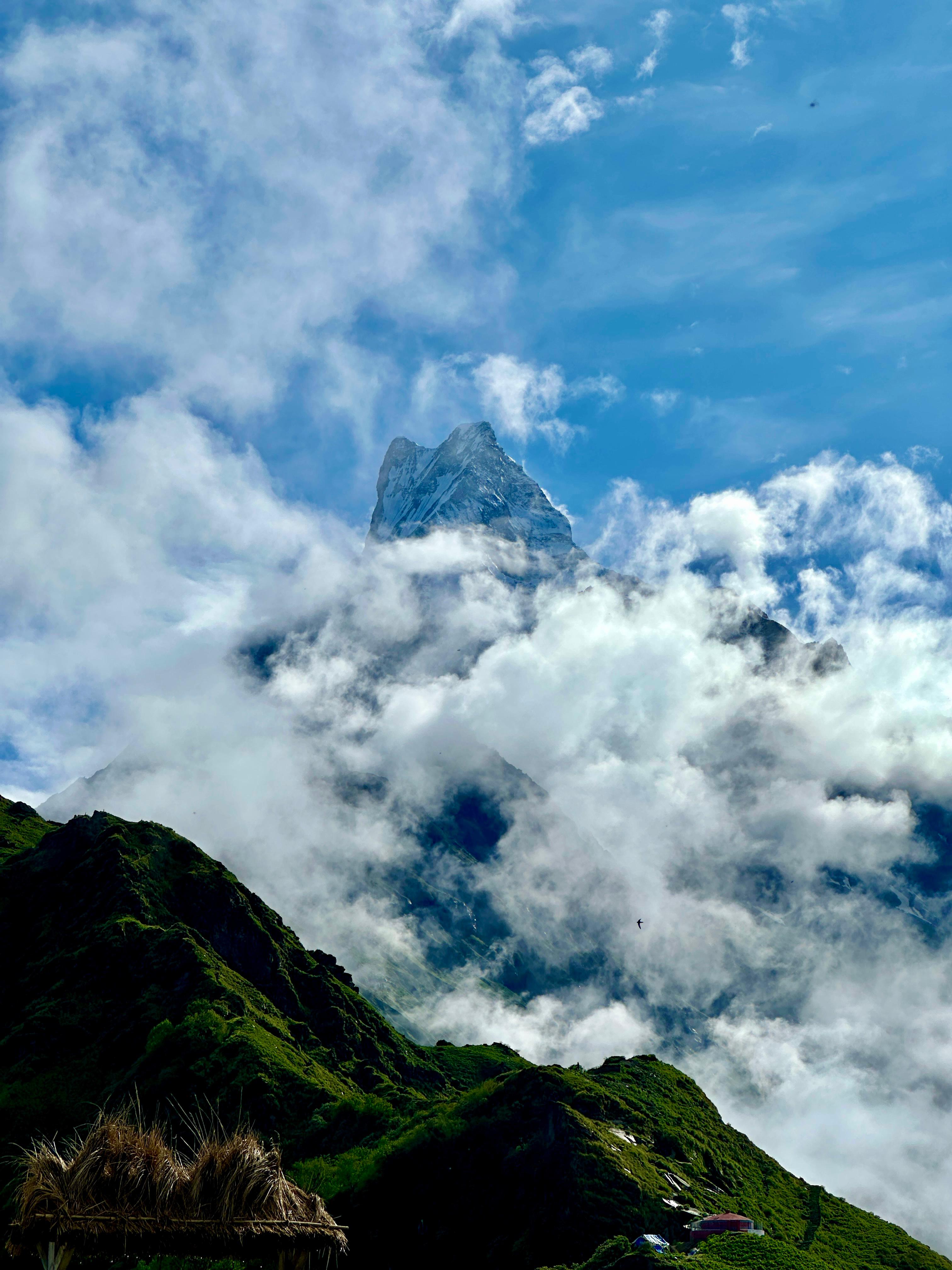
The trek is classified as moderate, making it an ideal choice for both experienced hikers and fit first-timers. Beyond the scenery, you will immerse yourself in the rich culture of the Gurung and Magar communities, famous for their hospitality and traditional stone-roofed villages. Highlights of this specific 12-day itinerary include a spectacular sunrise from Poon Hill (3,210m), the sacred "Fishtail" peak views from Machhapuchhre Base Camp, and a therapeutic soak in the natural hot springs at Jhinu Danda.
You can change this itinerary, services, accommodation, duration of this trip etc.to suit your needs and budget. The choice is yours. Let us help you tailor your perfect holiday.
Upon arrival at Kathmandu's international airport, you will be transferred to your hotel. In the evening, you will meet your team for a pre-trek briefing to review the itinerary, check your gear, and finalize permits.
3 star hotel
1340m
Enjoy a scenic drive west to Pokhara, the "Gateway to the Annapurnas". The journey follows the Trishuli and Marsyangdi rivers, offering views of green hills and rural villages. You will spend the night in Pokhara, a tranquil city located on the banks of Phewa Lake.
Provided
1350m
The adventure begins with a short drive to Nayapul. After registering at the checkpoint, you will trek through the villages of Birethanti and Hile, following the Bhurungdi Khola river past beautiful terraced farms to reach Tikhedhunga.
5-6 hours trek
Nepali Cuisine
Provided
1960m
Today features a challenging ascent up the famous 3,500 stone steps of Ulleri. The trail continues through dense forests of oak and rhododendron; which bloom vibrantly in spring; before arriving at Ghorepani, a settlement on a ridgeline offering early views of Dhaulagiri.
5-6hr
Nepali Cuisine
Provided
2840m
Before dawn, you will hike to the Poon Hill viewpoint (3,210m) for a breathtaking sunrise over the Annapurna and Dhaulagiri ranges. After breakfast, the trek continues through beautiful forests and deep gorges to reach Tadapani
7-8hr
Nepali Cuisine
Provided
3210m
The trail descends through rhododendron forests toward the Kimrong Khola valley. After crossing a suspension bridge, you will climb a steep stone staircase to reach Chhomrong, a large Gurung village situated on a hillside with stunning views of Annapurna South and Machhapuchhre.
5-6 hrs trek
Nepali Cuisine
Provided
2170m
Leaving Chhomrong, you descend 2,500 stone steps to the Chhomrong Khola before climbing again toward Sinuwa. The trail then enters a thick bamboo and oak forest, eventually leading to the small settlement of Himalaya near the overhanging Hinku Cave.
6-7 hours trek
Nepali Cuisine
Provided
2932m
The air becomes crisper as you ascend through a narrow gorge into the Annapurna Sanctuary. You will stop at Machhapuchhre Base Camp (3,700m) for lunch and views of the sacred peak. A final 1.5 to 2-hour walk leads you to Annapurna Base Camp (4,130m), where you will be surrounded by a massive 360-degree amphitheater of snow-capped mountains.
5-6 hrs trek
Nepali Cuisine
Provided
4130m
After watching a magnificent sunrise over the glaciers, you will begin your descent. The trail retraces your steps back down the Modi Khola valley, passing through Deurali and Himalaya to reach the tranquil forest village of Bamboo.
6-7 hours trek
Nepali Cuisine
Provided
2310m
You will trek back toward Chhomrong and then descend a steep trail to Jhinu Danda. Here, you can relax your tired muscles in the natural hot springs by the Modi Khola river. Afterward, you will trek to a nearby road-head and take a jeep or bus back to your hotel in Pokhara.
1hr
Nepali Cuisine
Provided
1780m
Say goodbye to the mountains as you return to Kathmandu by luxury bus. You will have free time in the evening to explore Thamel or do some last-minute souvenir shopping.
Breakfast, Lunch
3 star hotel
Your journey concludes with a farewell lunch or dinner and the distribution of trek achievement certificates. You will then be transferred to the international airport for your final departure.
Upcoming Trip Departures:
| Date (Start - End) | Price (Per Person) | Availability | Book |
|---|---|---|---|
| April, 2026 | |||
| Tuesday, Apr 21 - Friday, May 01 | USD $ 937 | Available | Inquire Now |
| May, 2026 | |||
| Tuesday, May 05 - Friday, May 15 | USD $ 937 | Limited | Book Now |
| Thursday, May 14 - Monday, May 25 | USD $ 937 | Limited | Book Now |
While the Annapurna region is beautiful year-round, the sources identify two primary "peak" seasons that offer the most stable conditions for trekking:
The ABC trek is classified as moderate, meaning it is accessible to first-timers who are in good health, but it still requires significant physical effort.
Accommodation in the Annapurna region is provided by teahouses, which are basic mountain lodges that offer a unique glimpse into local life.
The most significant things to be included on the backpack are:
Others
Small medical kits to put some emergency necessary medicines which you need.
All visitors to Nepal require a visa except Indian nationals. Citizens of SAARC nations, such as Pakistan, Bangladesh, and Bhutan, are exempt for up to 30 days.
Obtaining a Nepal visa is straightforward. You can apply online at https://nepaliport.immigration.gov.np/ within 15 days of your arrival. The application requires your hotel address in Nepal and a digital passport-sized photo.
Once submitted, print the confirmation page and present it at the immigration section of Kathmandu airport along with your passport and the visa fee.
To book the Annapurna Base Camp Trek, you'll need to book a trip with a government authorized trekking agency in Nepal like us. Nepal One Adventure will handle the necessary permits, guide, and porters services you will be needing during the trek. To confirm a booking, we require 10% of the whole trip cost. The money will be used to prebook the hotels (which will be very hard to get during peak seasons), and acquire the required permits. You can pay the remaining payment right before we start your trek, i.e. upon arriving in Nepal.
After the initial booking, we will need your detailed informations i.e documents like passport copy, photo, flight details, travel insurance, etc. We will ask for these documents within a week of booking your trek. While booking with us, we want to let you know that we are concerned about your safety, and all your documents will be safely with us.
Also during the trek, you will constantly have the experienced guide to provide you with the best recommendations throughout the trek.
Last Minute Bookings of Annapurna Base Camp Trek
If you have, all your documents ready, along with travel insurance, we take the last minute bookings too. We will do our best to run your trek on intended time, if everything goes as per time. You need to pay full amount before 24 hrs of the trek departure date. For customised treks, please stay in touch with us to check availability and arrangements.
The trek is comparatively easier than the Everest Base Camp trek. This is because it involves shorter days of trekking. You have to reach elevations of a maximum of 4,130 m / 13,550 feet. You only have to stay for a few days on higher elevations. Despite, it is very essential to take precautionary measures. There are green forests in the low altitude which provides plenty of fresh air. The trek begins at an altitude of 800m/2,625 feet which allows sufficient days for adaptation.
The best month for the Annapurna Base Camp trek is during the pre-monsoon months. This is generally from March to May. However, post-monsoon months starting from late September till December are also considered favorable. However, you need to prepare accordingly during the winter seasons. Some people also go trekking in February and early September.
We will run our booked trips under normal circumstances. You will still be going on the trip even if other hikers cancel at the end moment. We will not cancel the whole trip even if there is less number of participants. Please note that we will not be continuing the trip if there is a political riot, natural disasters, pandemic, epidemic or catastrophes, etc.
You will be guided by experts who are experienced and have been to camp multiple times for years. Our guides are locals who communicate in English. They acquire deep knowledge of the mountain, people, culture, hygiene, and safety.
You need to pack your bags lightly because you will not be able to carry heavy loads along with the trek. However, essential items should be kept at least for 8 days. You will not be able to enjoy your journey in the Himalayas unless you pack wisely. You will be sleeping in small lodges and tea houses during the entire trip. Please be prepared with the right clothes as per the season. It will get colder at the higher elevations especially during winters. You can also consult us or simply visit our comprehensive packing list for the Annapurna Base Camp trek.
Trekkers will enjoy 3 hearty meals on each day of the trek. You will have breakfast and dinner at the same lodge where you will stay at night. You will be provided lunch at teahouses or small restaurants along the way. You can easily choose your favorite food from the menu provided to you.
Teahouses provide a variety of hearty meals, including traditional Nepali Dal Bhat (rice, lentils, and vegetables), noodles, pasta, eggs, and pancakes. It is often recommended to eat vegetarian meals at higher altitudes for better hygiene and digestion.
Yes, the trek is fixable. We can continue to other trekking as per guest request. However, visit other trekking sites may include additional charges.
You are required to have the Annapurna Conservation Area Permit (ACAP), which currently costs approximately NPR 3,000 (around USD 25). A Trekkers’ Information Management System (TIMS) card is also historically required, though some local regulations vary.
Yes, it is considered one of the best "beginner-friendly" high-altitude treks in Nepal. While no prior trekking experience is mandatory, beginners should have a reasonable level of fitness and a positive mindset to handle the daily uphill climbs.
Yes, most teahouses offer Wi-Fi and charging stations for a small fee, usually ranging from USD 2 to 5 (NPR 200–500). However, the internet connection can be slow and unreliable due to the remote geography.
Preparation should focus on cardiovascular endurance and leg strength. It is recommended to engage in activities like running, cycling, or swimming at least 15 days before the trip. Practicing hiking with a weighted backpack and climbing stairs is also highly beneficial for the terrain.
The highest point of the journey is Annapurna Base Camp itself, which sits at an elevation of 4,130 meters (approximately 13,550 feet) above sea level. At this altitude, you are surrounded by a massive 360-degree amphitheater of glacial peaks over 7,000 and 8,000 meters high.
Trekkers stay in "teahouses," which are basic mountain lodges providing essential amenities such as a bed, blankets, and a communal dining area. Rooms are typically twin-sharing, and while lower-altitude lodges may offer attached bathrooms, facilities often become communal and more basic at higher elevations. During peak seasons, teahouses can become very crowded, and some trekkers may even need to sleep in the dining hall.
Yes, altitude sickness, also known as Acute Mountain Sickness (AMS), is a potential risk since the trek goes above 4,000 meters. To minimize this risk, itineraries are designed for gradual ascent, and trekkers are encouraged to stay hydrated, eat well, and avoid alcohol and smoking. Common symptoms include headaches, dizziness, and nausea, and any signs of illness should be reported to your guide immediately.
You can buy bottled water at most teahouses, but to minimize environmental impact, it is better to use refillable bottles and treat local tap water with purification tablets or filters. Safe drinking water is critical, and you should never drink untreated water directly from rivers or taps.
Pokhara is widely recognized as the “Gateway to the Annapurna Region” offering a diverse mix of natural beauty, cultural landmarks, and high-adrenaline adventure. A primary highlights are Phewa Lake (famous for scenic boat rides), cozy cafés, and restaurants, perfect for relaxing before or after a trek. For those seeking education and culture, the International Mountain Museum provides deep insights into Himalayan history, while thrill-seekers can participate in world-class paragliding, bungee jumping, or ultra-light flights that offer spectacular views of the Annapurna range and the iconic Machhapuchhare (Fishtail) peak. In the evenings, the city offers a lively atmosphere with numerous nightclubs and bars to celebrate the completion of a successful journey.
Planning to spend more time in Pokhara? Read this blog to learn about the best activities and experiences the city has to offer.
12 Days from US $1500
| No. of People | Price per person |
|---|---|
| 1 Pax | US $ 937 |
| 2 - 5 Paxes | US $ 865 |
Find information on visa, detailed itinerary, what's included, gear list and everything you need to know about this adventure in this PDF.
Download Trip PDFYour Booking has been confirmed.
Please check your Email for details.
Sign up to receive the best offers

Package added to your wishlist
View Wishlist
This item is already in your wishlist.
View Wishlist
Recaptcha Validation Failed.
Your enquiry has been submitted successfully!
Reviews (0)